The race
How a race runs at Red Shores
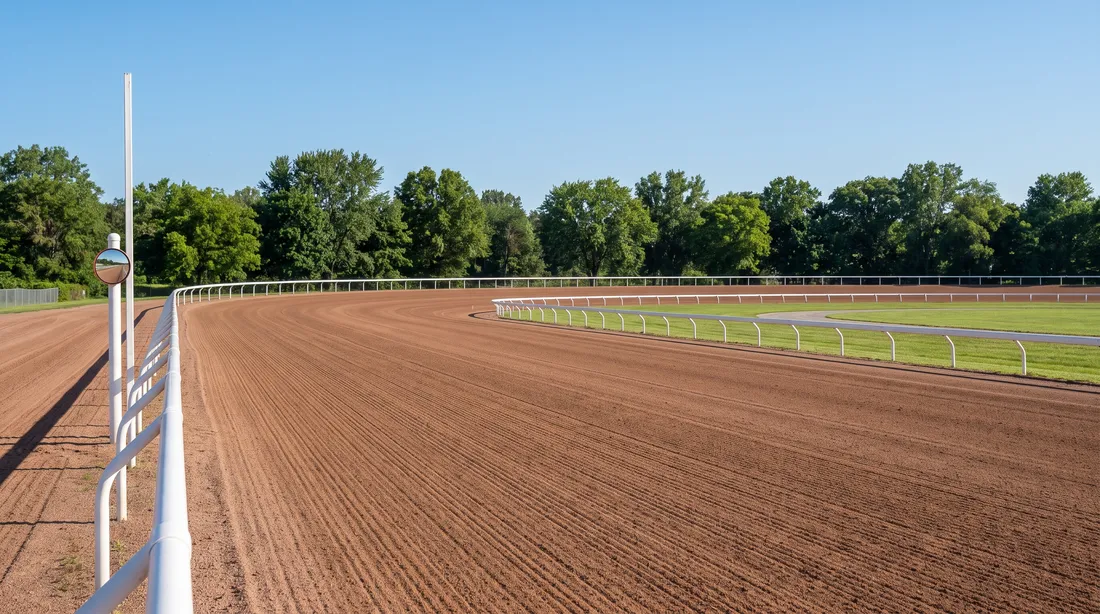
The Charlottetown Driving Park, the oval at Red Shores Racetrack & Casino on 58 Kensington Road, dates from 1888. This page takes one race apart term by term, from the horse's gait to the judges' call at the line.
By the Form Desk Checked October 2026
No. 1
2:30
the 1879 mile standard
The race
Where the Standardbred name comes from
Standardbred is a breed name with a date attached. In 1879 a trotting register set its entry mark: a stallion had to cover a mile in 2:30 or faster, or in 2:35 when pulling a wagon. Horses that reached that mark came to be called Standardbreds, after the standard itself. The national registry and record-keeper for the breed is Standardbred Canada, which has had its current structure since 1998.
Red Shores treats harness racing as a large piece of island heritage. The venue goes as far as calling Prince Edward Island the Kentucky of Canada.
No. 2
80%
pacers, about
The race
Trotters and pacers
Each harness horse races at one of two gaits, the trot or the pace. A trotter moves its legs in diagonal pairs, left front together with right rear, and for the breed this is the more natural gait. Pacers swing both legs on one side at once, which is why they are called sidewheelers. They account for about 80% of harness horses. Most race in hopples, straps that tie the front and rear leg on one side together so the horse holds its gait.
Leaving the gait has a name of its own. A horse that switches to a run or a gallop has made a break. In the race program, that break appears as an X.
No. 3
2
wheels on a sulky
The race
The sulky and the harness
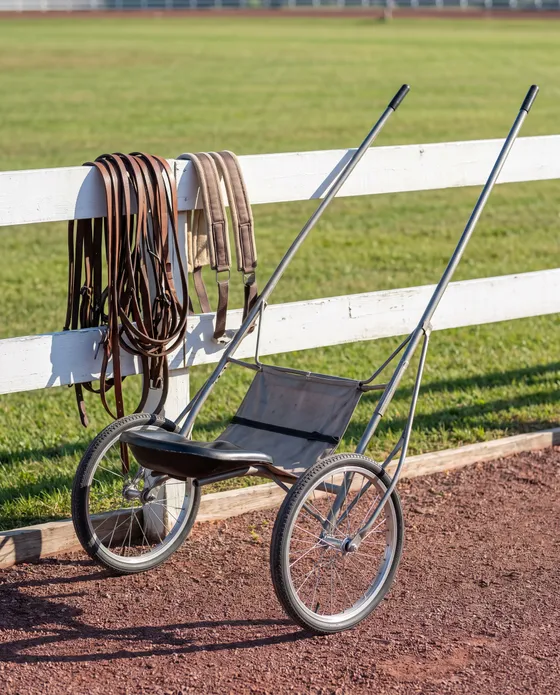
The sulky is the light, two-wheeled seat a harness horse pulls behind it. It also goes by the names cart and racebike. The harness does two jobs: it fixes the sulky to the horse, and it gives the driver the means to steer.
No. 4
1
starting gate car
The race
Gate car, post and rail
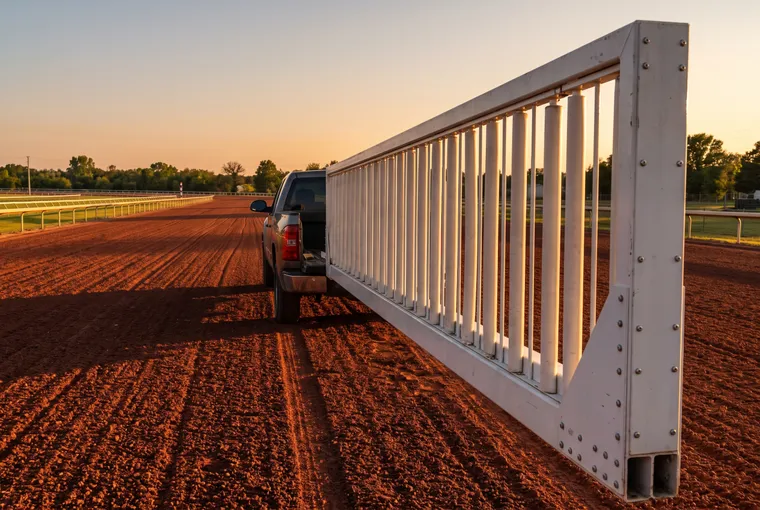
A horse has to earn a place in a betting race before it gets one. It must run a mile under a set time standard in a qualifier, and only then can it race for pari-mutuel wagers. At the start of each race, the official starter and the driver of the starting gate car work together.
Post position carries weight. In general, the closer a horse starts to the inside rail, the better its chance, and this holds most strongly on smaller tracks. A horse that cannot find room along the rail and has to race outside other horses is described as parked out.
No. 5
1
photo at the line
The race
The line, the photo and the judges
The home stretch is the straight closest to the spectators, and the finish line sits on it. When two horses arrive at the line too close to call, officials examine a photo taken precisely at that line. A photo that still cannot split them produces a dead heat.
Judges serve as the referees of a race night, and an inquiry is their review of a race. At Charlottetown, a Judges Tower stands in the centrefield of the Driving Park. A video crew records every race, for viewing at the track and at simulcast locations. Regulation of the sport rests with the Maritime Provinces Harness Racing Commission (MPHRC), which covers Prince Edward Island, Nova Scotia and New Brunswick.
No. 6
Q3
Reader questions · short answers
Questions
Q1How does a trotter differ from a pacer?
A trotter moves its legs in diagonal pairs, left front with right rear. A pacer moves the two legs on the same side together, which is why pacers are called sidewheelers.
Q2What does an X next to a horse in the program mean?
It marks a break. The horse left its gait during the race and went into a run or a gallop.
Q3What if two horses reach the finish line together?
Officials look at a photo taken exactly at the line. If the photo cannot separate the two horses either, the result is a dead heat.
Also in this issue